How Can Fencing Turn an Unused Side Yard Into Useful Outdoor Space? November 22, 2026 Comments: 0
For some Pittsburgh-area homeowners, the space beside the house is little more than a passage to the backyard. It may be too narrow for a traditional patio, visible from neighboring windows, or close to a sidewalk or driveway. But an overlooked side yard can become useful when you give it a specific purpose and plan the fencing around that purpose.
You do not necessarily need to fence the entire yard. Depending on the layout, a small enclosure or a strategically placed screen may be enough to make the area more comfortable, separate it from foot traffic, or support an everyday activity.
Can You Fence In Just a Side Yard Instead of the Entire Property?
Yes, it may be possible to fence only your side yard. The best approach depends on property boundaries, available width, access needs, easements, and local requirements. A targeted project can define one area while leaving the front and back yards largely unchanged.
A complete small enclosure differs from a privacy screen. An enclosure uses connected fencing and suitable boundaries, often with a gate, to form a designated space. A screen uses one or more sections to block a particular view without closing off the entire area.
For example, a seating nook might need screening along the side facing a neighbor. A dog area would need a more complete containment plan. Partial yard fencing lets the design match the purpose rather than treating every part of the property the same.
Why Fence a Side Yard Rather Than Leave It Open?
An open side yard often feels like a route through the property instead of a place to spend time. When houses are close together, someone sitting outside may also be visible from nearby windows or the street.
Fencing can create a clearer distinction between a private activity area and a walking route. A strategically placed panel may reduce direct sightlines, while a gate can establish an intended entrance. Neither feature guarantees privacy from every angle or prevents unauthorized access, but each can make the area’s purpose more apparent.
Separation can matter just as much as screening. A defined side yard can keep pets away from garden beds, give a sitting area its own boundary, or distinguish household activity from regular foot traffic.
What Can You Do With a Newly Fenced Side Yard?
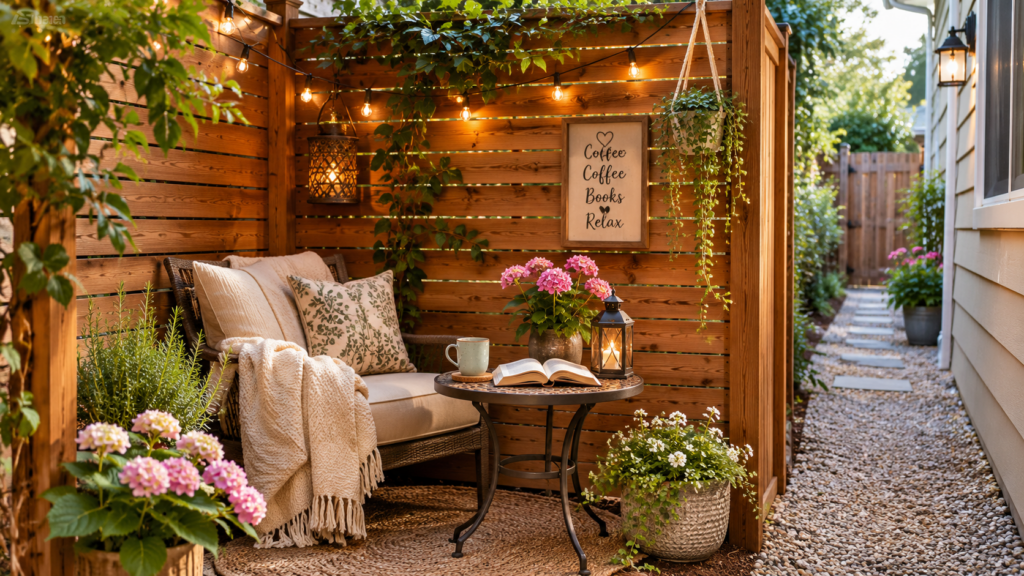
Create a coffee or reading nook. A small table and chair may be enough to turn a quiet corner into a place for a morning drink or a few minutes outside. Privacy screening can be useful if the space faces a neighbor’s window or a frequently used walkway. Check whether chairs can be pulled out without blocking the route beside the house.
Set aside a garden or potting area. Raised containers, a compact potting bench, or a row of planters may fit where a larger garden cannot. Fencing can give the area a defined edge and some separation from passing activity. Plant choice still depends on the light, soil, drainage, and growing conditions in that particular location.
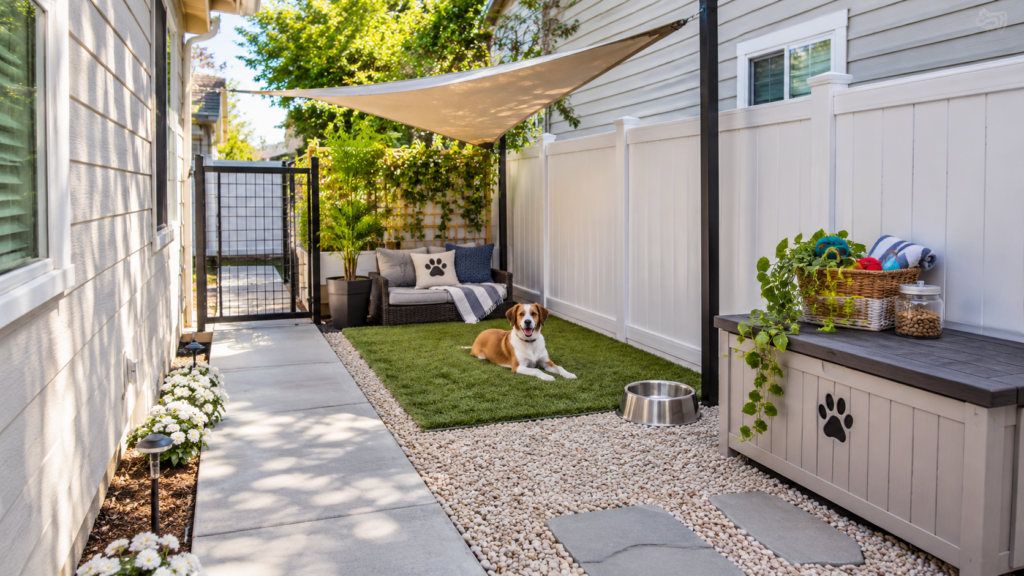
Plan a dog area sized for your pet. An appropriately enclosed section may provide a separate place for supervised outdoor time or short breaks. Its suitability depends on the dog’s size, behavior, and need for movement. A narrow strip is not a substitute for exercise, and you should never assume a fence is escape-proof.
Make room for supervised activities. Depending on the width and surface, a side yard could hold a small outdoor art station or another low-space activity. The layout must let adults supervise, avoid sharp corners or nearby equipment, and keep required exits and walkways clear.
Organize a utility area. A defined section may accommodate bins or gardening supplies if access for collection, maintenance, and household use remains practical. Where the goal is mainly to conceal clutter, a short screen may be more appropriate than a fully enclosed space.
The best option is usually one primary use, not several competing uses squeezed into the same narrow strip. Measure the area and consider where people will stand, walk, sit, and open gates before committing to a design.
Would a Private Sitting Area or Garden Fit the Space?
Start with usable width, not just the distance between the house and property line. A fence has posts and a finished face, and you still need room to move comfortably. If a chair, planter, or potting bench leaves little space to walk through, the layout may be better suited to a screen or a simpler garden edge.
Look at the space at different times of day. The house, neighboring structures, and proposed fence may cast shade on seating and plants. Solid panels can improve screening but may also make a narrow area feel more enclosed and affect light or airflow. An open or partially open style may strike a better balance.
Fencing defines a boundary; it does not correct pooling water, unstable soil, steep grades, or poor growing conditions. Address those issues separately before planning furniture, planting beds, or a surface that needs to stay dry and level.
Could a Separate Pet Area Make the Rest of Your Yard More Useful?
A designated pet section can help separate bathroom breaks or supervised outdoor time from a patio, entertaining area, or vegetable garden. That division may make the rest of the yard easier to use for its intended purpose, especially when outdoor space is limited.
Containment requires more thought than selecting a fence height. Consider your pet’s size, jumping and digging behavior, gate operation, spaces beneath the fence, and any nearby objects that could help an animal climb. The ground should be suitable for paws, with attention to drainage and cleaning.
Provide shade and water when appropriate, and supervise pets outdoors. Very narrow side yards may be better for brief, managed use than for play or exercise. If the space is too tight, overheats, or cannot be enclosed appropriately, another area of the property may be a better choice.
Should You Choose Solid Privacy Fencing or a More Open Design?
The best fence supports the planned activity while respecting the site’s limitations. If your main concern is a direct view into a small sitting area, a solid privacy section may help. If you want to keep the space light and visually connected to the rest of the yard, spaced pickets or another open design may be more comfortable.
For side yard privacy ideas, consider where people will sit or stand and which direction views come from. You may only need screening in one direction. Fence height, panel orientation, and slope can all change the result, so consider a design from the actual viewpoints.
Material choice matters too. Wood fencing offers different board arrangements and finishes but typically needs periodic upkeep. Vinyl fencing offers privacy and other styles and generally does not need painting or staining. Compare appearance, maintenance expectations, and available space for installation rather than assuming the tallest solid fence is always best.
What Access Must Stay Available Beside Your House?
A side yard may be one of the few practical ways to move between the front and back of a narrow property. Before adding fencing, walk the route with the equipment you actually use. Think about lawn mowers, wheelbarrows, trash bins, deliveries, and any other items that need to pass through a gate.
Leave appropriate access to utility meters, HVAC equipment, hose connections, shutoffs, and other service points. Gates must have enough clear opening and swing room for everyday use and service visits. Do not place posts, panels, planters, or storage where they would block required equipment clearances or drainage paths.
Also consider basement doors, window wells, and other potential emergency escape or rescue openings. An enclosure must not obstruct required egress or emergency access. Where equipment clearances, utilities, or safety requirements are uncertain, have the relevant professional review the layout before installation.
What Should Be Checked Before Enclosing a Side Yard?
First, confirm where your property ends. Existing landscaping or an old fence does not necessarily establish a legal boundary. If the line is unclear, a professional survey may be appropriate. Review recorded easements and any access rights before choosing a fence location.
Next, check the rules for the municipality where the home is located. Requirements can vary across Pittsburgh and surrounding communities, including rules about fence placement, height, visibility, and approvals. If a homeowners association applies, review its requirements, too.
Within the City of Pittsburgh, the City’s Zoning FAQ identifies fences six feet high or less as work requiring zoning approval but not a building permit. The city’s current process uses a combined Building and Development Application. Confirm your parcel’s requirements before proceeding.
Finally, coordinate underground utilities before digging for posts. Pennsylvania One Call provides the process for notifying utility operators before excavation. The person doing the excavation should submit the notification; if a contractor is doing the digging, confirm the contractor has arranged it. Locating public utility lines also does not replace checking for privately owned buried lines.
How Can Pittsburgh Fence Company Help Plan a Focused Enclosure?
Start with a simple question: what is the one activity you want this side yard to support? A quiet chair, a few planters, or a separate pet space may call for very different fence layouts. Note the available width, existing gates, utilities, drainage, and areas where you want more screening.
Pittsburgh Fence Company offers residential fencing and can discuss materials and placement for a focused project. Its Fence Guide also outlines useful details to gather, including your proposed layout, fence purpose, budget, and property information.
If you are considering residential fence installation in Pittsburgh or a surrounding community, contact Pittsburgh Fence Company to request a site assessment and discuss what may be practical. You may not need to enclose your whole yard to give one overlooked section a clearer purpose.

As the owner of Pittsburgh Fence Co, Inc. Jeff has had decades of experience installing fences on businesses and homes throughout Pittsburgh.