How Do You Plan a Privacy Fence When Neighboring Homes Sit Higher Than Your Yard? October 9, 2026 Comments: 0
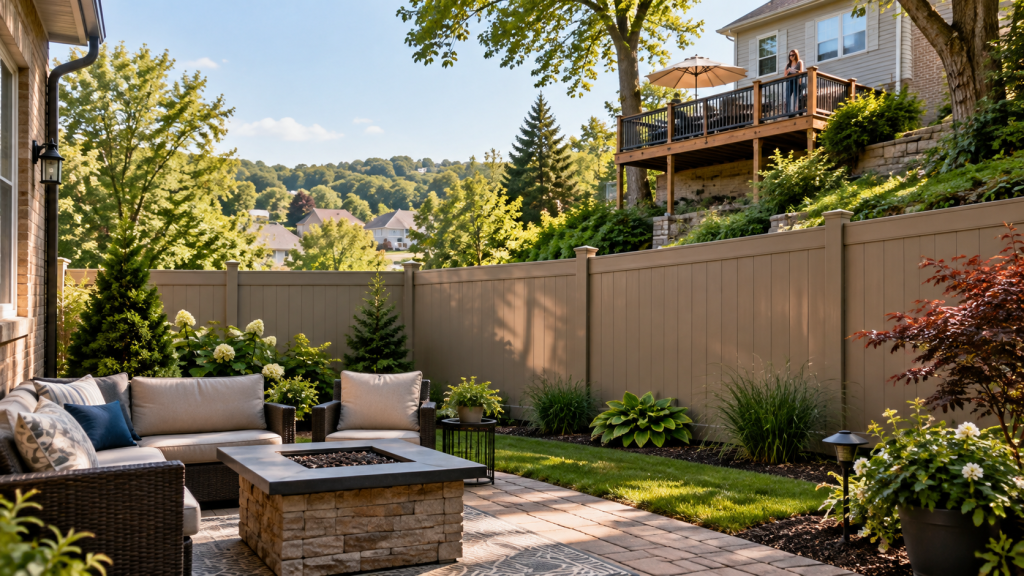
A privacy fence can make a backyard feel more comfortable and defined, but the results depend on more than fence height. This matters especially around Pittsburgh, where sloped lots and homes built at different elevations can leave one property looking down on another.
A standard fence might block a view from a neighboring yard at ground level while doing very little about a second-story window or an elevated deck. That does not necessarily mean the fence is ineffective. It means you need to evaluate the privacy problem from the actual viewing angle.
If your neighbor’s house or deck sits higher than your yard, start by identifying exactly where you want more privacy. Then consider the line of sight between that area and the elevated viewing point. Fence placement, grade changes, permitted height, and the location of your patio or seating area can all affect how much screening a fence provides.
For homeowners considering privacy fence installation in Pittsburgh, evaluating those details before choosing a layout can help set realistic expectations about what fencing can accomplish.
Why Can Neighbors Still See Into a Yard With a Privacy Fence?
A fence blocks whatever falls behind it from a particular viewing position. When both people stand at roughly the same elevation, a solid backyard privacy fence may block much of the direct view between the properties.
The situation changes when one viewing point is higher.
Imagine sitting on a patio while a neighboring deck is several feet above your yard. The person on that deck is looking downward at an angle. Even if a fence blocks the lower portion of the view, the sightline may pass over the top of the fence and continue toward your patio.
The same issue can occur with second-story windows. A fence might provide useful screening between the two yards without blocking the downward view from an upstairs room.
Sloped ground can complicate the relationship. A privacy fence for a sloped yard follows or responds to changing grade, while the places you want to screen may sit higher or lower than different portions of the fence.
This is why it helps to think in terms of sightlines rather than assuming that a certain fence height automatically creates privacy.
Homeowners exploring their options can review Pittsburgh Fence Company’s residential fencing services to see the types of residential fencing available.
Which Parts of Your Backyard Actually Need More Privacy?
Before deciding where a fence should go, identify where feeling exposed affects how you use the property.
That might include a patio where you eat outside, a seating area, a hot tub, a pool area, or another part of the yard where family and guests spend time. Privacy could also matter around frequently used windows or doors if the neighboring property has a direct view toward the house.
Walk through the yard and look at the property from those positions.
Where do you usually sit or stand? Which neighboring windows, decks, porches, or higher sections of yard are visible? Are there other areas where you actually want to keep an open view?
This exercise helps define the problem before selecting a fence design.
A homeowner who mainly wants privacy around a small patio may have different needs from someone trying to screen most of a backyard. Likewise, a fence designed around a play area might have different placement considerations from one intended to make an outdoor dining area feel less exposed.
The goal does not have to be to hide the entire property. It can improve privacy where it matters most.
How Does Fence Placement Affect Privacy From Above?
Many homeowners initially picture a privacy fence running directly along the property line. That may make sense for defining the yard, but it is not automatically the location that provides the most useful screening from an elevated view.
The relationship between three points matters:
- Where the view originates
- Where the fence or screen is located
- Where the homeowner wants privacy
- When the viewing point is significantly higher, moving the screening closer to the protected area can sometimes change the sightline more effectively than placing the same screen farther away.
Think of holding a book in front of your face. It can block something much larger in the distance because the book is close to your eyes. Move that same book farther away, and your view around it changes. Fence screening works on similar sightline principles, but you also need to consider property conditions, fence dimensions, grade, and local rules.
This does not mean every homeowner should install fencing close to a patio. Property boundaries, access, drainage, gates, usable yard space, appearance, and municipal requirements still matter.
It does mean you should evaluate fence placement as part of the privacy plan, rather than treating the property line as the only possible starting point.
Will a Taller Fence Solve the Problem?
Sometimes additional fence height improves screening. It does not guarantee that an elevated deck or upper-story window will disappear from view.
If the neighboring viewing point is high enough, its sightline may still pass over a taller fence. That is why simply asking for the tallest available fence can lead to expectations the finished project cannot meet.
Local requirements also affect what you can install.
For properties within Pittsburgh city limits, the City of Pittsburgh’s current Zoning FAQ states that fences six feet or less are among the types of work requiring zoning approval but not a building permit. That guidance should not be read as a universal fence-height rule for every property or municipality. Homeowners should verify the zoning requirements that apply to their individual project.
Rules outside the city can differ. For example, Ross Township currently states that privacy fences in residential districts may be installed in side and rear yards behind the building line and cannot exceed six feet. Mt. Lebanon’s current guidance requires a fence permit and places additional restrictions on solid fencing. These differences show why a homeowner should check the municipality where the property is located instead of relying on a general Pittsburgh-area rule.
If privacy from an elevated neighboring property is the goal, determine what an allowable fence can realistically block before assuming more height will solve the problem.
Can Targeted Screening Provide Privacy Without Enclosing the Entire Yard?
Some homeowners do not need a solid fence around every side of the backyard.
If the unwanted view comes from one direction, a more targeted fence layout may be worth evaluating. A fence run could focus on the side of a patio, seating area, or other frequently used space rather than surrounding the entire property.
This approach can also help preserve views the homeowner wants to keep.
For example, one side of a yard may face a neighboring deck while another opens toward trees, a garden, or a view the homeowner enjoys. The privacy plan can account for both instead of treating every direction the same.
Whether a partial or targeted fence is practical depends on the actual lot. Property lines, slope, gates, access, local regulations, and the location of the activity area all need to be considered.
A site-specific discussion helps because privacy isn’t only about how much fencing you install. It’s also about whether the fencing interrupts the views causing the problem.
Which Fence Styles Provide the Most Visual Screening?
Once you know where screening is needed, fence style becomes easier to evaluate.
Solid wood and solid vinyl designs can provide more direct visual screening than styles intentionally built with spaces between boards or panels. Pittsburgh Fence Company offers both wood fencing options and vinyl fencing options for residential projects.
Semi-private designs allow some visibility through the fence. Whether that matters depends on the viewing angle and the homeowner’s goals. A small gap may not matter from one position but may become more noticeable when someone is looking through the fence at an angle.
Material choice also involves considerations beyond this article’s privacy focus, including maintenance, appearance, and budget. Homeowners who are comparing those broader factors can review Pittsburgh Fence Company’s existing material information rather than trying to solve every decision through privacy alone.
For an elevated sightline problem, start with how much visual screening the design provides and how that screening interacts with the actual viewing angle.
When Should Fencing Be Coordinated With Landscaping or an Overhead Structure?
In some situations, a fence alone cannot reasonably block a view from well above the yard.
If an upstairs window or elevated deck has a steep downward view, the homeowner may need to think about privacy as a broader outdoor design issue. Landscaping or a separate overhead design element may help address portions of the view that a legal fence cannot screen.
Those improvements are separate from fence installation and may involve different contractors, design considerations, permits, or municipal requirements. Pittsburgh Fence Company should not be assumed to provide landscaping or overhead structures.
The fence can still play an important role. It may provide ground-level privacy, establish the outdoor area, and block lower sightlines while another properly planned element addresses the remaining view from above.
The important point is to recognize when the desired level of screening is beyond what fencing alone can realistically provide.
What Should You Show a Fence Contractor During a Privacy Consultation?
A useful privacy conversation starts with more than identifying the property line.
Show the contractor the specific places where you feel exposed. Stand where you normally sit on the patio or spend time in the yard and point out where the unwanted view originates.
It is helpful to identify:
- Neighboring decks, windows, porches, or elevated areas that create the sightline
- Patios, hot tubs, seating areas, dining areas, or other spaces you want to screen
- Significant grade changes across your yard and adjoining properties
- Views you would prefer to preserve
- Gates, walkways, driveways, and other access needs
- Known property boundaries or a current property survey
Pittsburgh Fence Company’s Fence Guide recommends preparing information on the fence’s purpose, municipal standards, desired height and style, exact location, and property boundaries before planning installation. The company’s residential guidance also recommends having property boundaries properly surveyed before installing a fence.
Photos can also help explain when a privacy concern is most noticeable. A view that seems minor from one end of the yard might feel very different when you’re seated on the patio.
The more clearly you can identify the problem, the easier it is to discuss a fence layout that reflects how you actually use the yard.
Plan Privacy Around Your Property, Not Just the Fence Height
When neighboring homes sit higher than your property, backyard privacy requires more planning than choosing a standard fence and placing it around the perimeter.
Elevation changes the viewing angle. Fence location changes what falls behind the screen. Where you spend time determines which views matter most. Local regulations also limit what you can install.
A well-planned privacy fence can improve screening and make an outdoor area feel more comfortable, but homeowners should have realistic expectations about elevated decks and upper-story windows.
If you are considering privacy fence installation in Pittsburgh, Pittsburgh Fence Company can discuss your property, privacy goals, fence options, and possible layout. Bring information about your property lines, grade changes, problem sightlines, and the outdoor spaces you use most so the conversation can focus on a practical solution for your yard.

As the owner of Pittsburgh Fence Co, Inc. Jeff has had decades of experience installing fences on businesses and homes throughout Pittsburgh.